Digital Map (2025)
A digital grief map tracing diasporic memory and colonial legacy

Project Statement
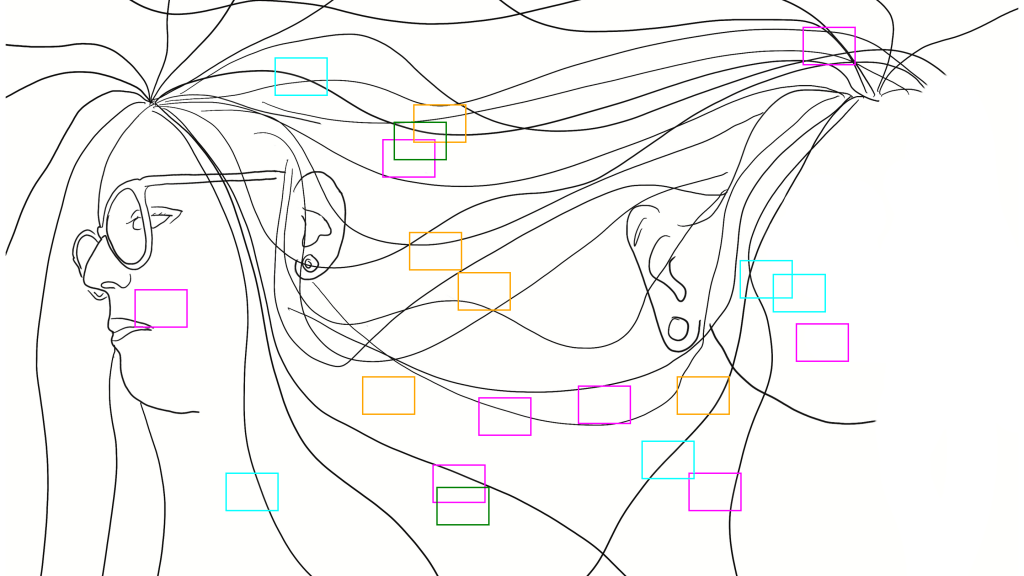
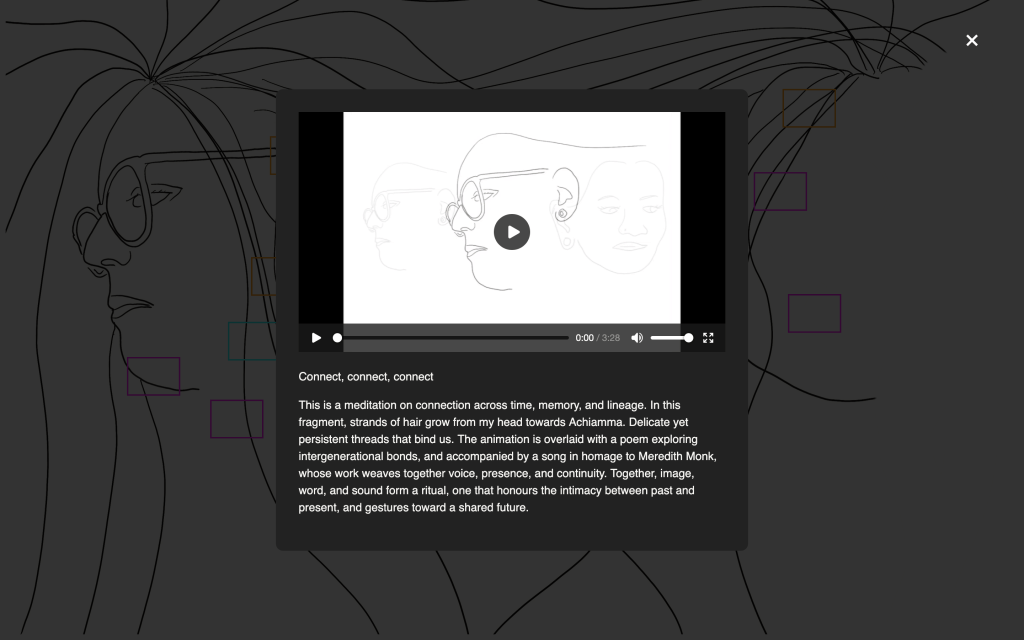
This project began as a film. It was meant to trace the story of Achiamma, my Sri Lankan grandmother, whom I met only once when I was two years old. But as I developed the film, I realised the story resists clarity. My connection to Achiamma is not linear, not whole. It is scattered, imagined, interrupted by silence and diaspora, by time and distance, and now, by my own hearing loss.
What emerged instead is a visual map. A cartography of a fragmented inheritance. Here, scenes become sketches. Sounds become descriptions. The resulting gaps are not filled, they are rendered visible. This project embraces incompleteness, not as failure, but as an honest expression of longing and dislocation.
The work draws on sensory fragments: video textures, written descriptions, sonic impressions composed and recorded in shifting states of remembering, seeing and hearing. Performance becomes a method of entering memory through the body, tentative, porous, uncertain. Some gestures are rehearsed while others dissolve before they arrive. Parts of the map are coded generatively, allowing memory to reconfigure itself with each view. The limitations of my hearing, its fragility, its distortion, became collaborators in the process. They shaped the tone, the tempo, the form.
Viewers are invited to navigate the map freely. It offers a non-linear open structure: one that allows for drift, repetition, interruption, and return.
This is a work born out of intimacy and distance. At times, it moves like fog, soft, diffuse, barely there. At others, it roots itself in the body, pulsing with grief or tenderness. Rather than build a finished narrative, I offer a terrain. You are invited to walk it, feel the edges, sense the lines. This is not a tribute. It is an attempt to touch something that has always been partially out of reach.
Audience Response
“I absolutely loved Achiamma film scene 5! It was mesmerising. What a privilege to have the film shot by your grandad, that’s really special. The music was haunting, beautiful and the way you interacted with the content through movement created depth and intrigue.”
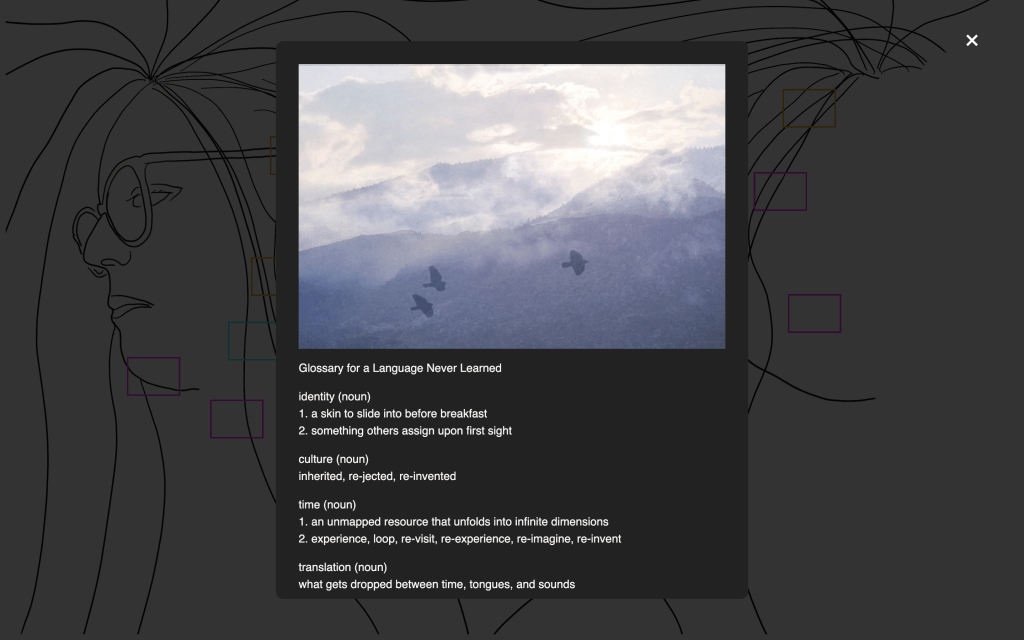
“This is amazing! I love how it’s a map and non-linear and that it shifts around with every visit, creating the unexpected. And somehow that does reflect how things are and how memory is, that they shift around with every visit and are never exactly the same…I liked the poems and writing best especially the Glossary for a Language Never Learned.”
“I really enjoyed the structural design of the piece and I think it highlights the difference between reality and the perceived reality of memory. The radomisation function of the piece also represents the branches, byways, and random paths that we go down in trying to recollect a particular event. This makes exploration complex and realistic.”
Future Iterations
This piece will evolve in future versions, deepening its spatial architecture. It opens questions about how digital cartographies, colonial legacies, and grief shape the ways we attempt to connect to each other and the world.
 Leah M. Bowie